


Description
🍳 What Is a Commercial Thermostatic Griddle?
A commercial griddle is a flat cooking surface designed for high-volume kitchens, commonly used in restaurants, cafés, and hotels. A thermostatic griddle takes it further by offering precise temperature control. Instead of guessing heat levels, you simply set your desired temperature, and the griddle maintains it automatically. No constant adjusting, no overheating, and no temperature fluctuations — just stable, reliable cooking.
No constant adjusting. No overheating. No temperature swings.
⚠️ The Problem with Traditional Griddles
Traditional griddles often come with inconsistent heat and heavy reliance on staff experience. It’s common to see the first batch cooked perfectly, while the next turns out burnt or uneven. During peak hours, these issues become even more obvious. As your business grows, small inconsistencies can lead to bigger problems like customer complaints, food waste, and slower kitchen operations.
🔥 Why Entree Thermostatic Griddle Stands Out
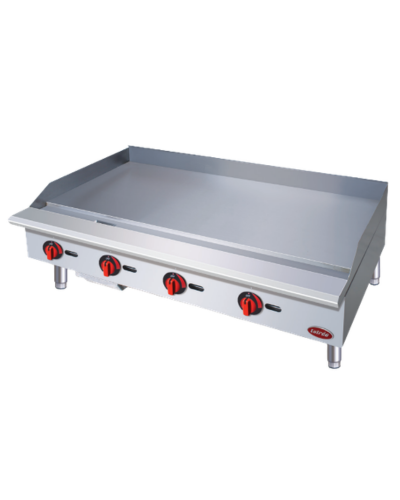
The Entree commercial thermostatic griddle is designed to solve these challenges by focusing on control, consistency, and efficiency.
Key Features & Benefits
- Precision Temperature Control
With its built-in thermostatic system, you simply set the exact temperature you need, and the griddle maintains it automatically. This eliminates overheating, sudden drops in heat, and no guesswork during cooking. What you get instead is stable, reliable performance that delivers consistent results every time. - Consistency across every order
Whether it’s your first or hundredth order, you’ll get the same color, texture, and doneness. This is essential for businesses that run multiple outlets, train new staff regularly, or aim to standardize food quality. - Reduced dependence on highly skilled staff
Unlike traditional griddles, a thermostatic griddle allows staff to follow preset temperatures, making training easier and reducing reliance on experience. - Better temperature control
Better temperature control means fewer cooking mistakes, less food waste, and more efficient operations. Over time, this leads to higher productivity and improved profit margins.